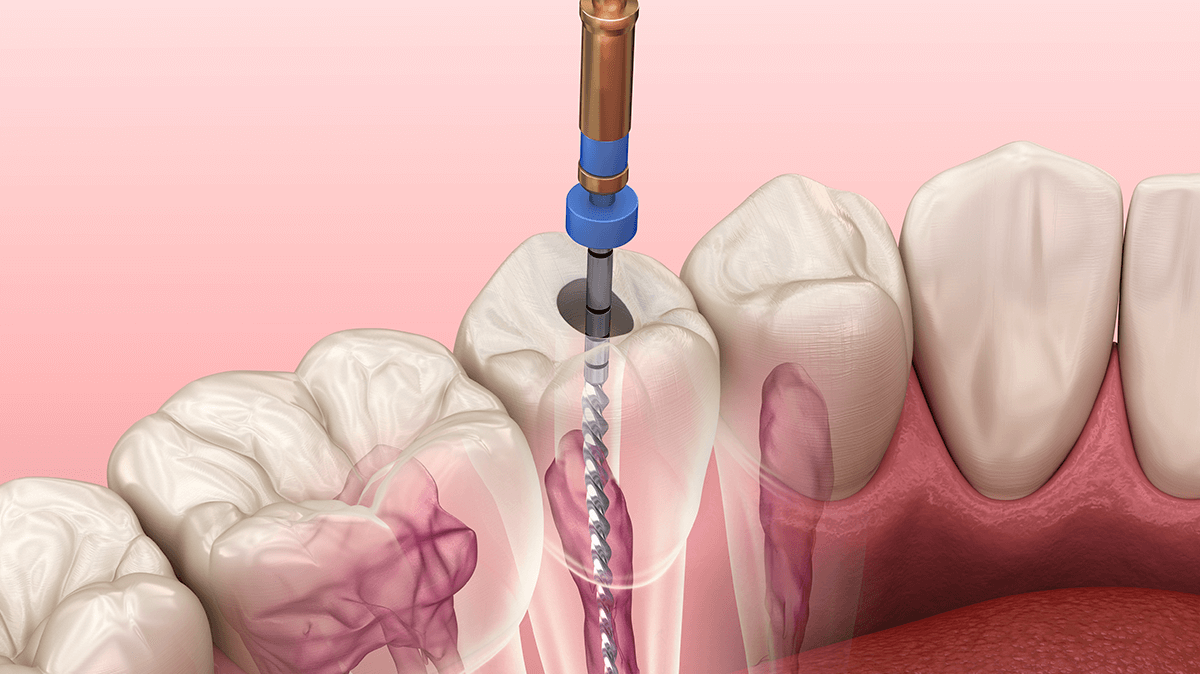
Root canal treatment, also known as endodontic therapy, is a application for the diseased pulp of a tooth that aims to eliminate infection and preserve the decontaminated tooth from further microbial invasion.
The pulp chamber and root canals are the cavities within a tooth that are naturally occupied by nerve tissue, blood vessels, and other biological entities. These components make up the tooth pulp together.
Endodontic treatment entails the removal of these structures, and the following shape, cleaning, and decontamination of the cavities with tiny files and irrigating solutions, followed by the filling of the decontaminated canals.
Candidates for Root Canal Treatment
The aim of root canal treatment is to reduce tooth pain and keep the tooth healthy for a longer period of time. Anyone with tooth pain or infection can undergo root canal treatment. This treatment aims to reduce tooth pain and keep the tooth healthy for a longer period of time by cleaning and filling the canals inside the tooth. A dentist's opinion is needed for root canal treatment to be performed. The dentist will evaluate the condition of the tooth and decide whether root canal treatment is necessary.
What is the Structure of a Tooth?
The structure of a tooth may vary in appearance, but it generally consists of the following components:
- • Gum: The tissue that surrounds and supports the teeth, protecting them.
- Enamel: A thin layer that covers the outer surface of the tooth and gives teeth their color.
- • Dentin: The tissue that makes up most of the structure of the tooth and provides its strength.
- • Pulp: The portion of the tooth that contains the canals that lead into the tooth and forms the tooth's living tissue.
- • Root: The portion of the tooth that is inside the gum and attached to it. The root of the tooth provides its strength and prevents the tooth from falling out by forming a strong connection with the gum.
When is Root Canal Treatment Needed?
Symptoms of a pulp infection include pain when eating or drinking hot or cold food and drink, pain when biting or chewing, and a loose tooth. As the infection progresses, the pulp dies and these symptoms often disappear.
However, the infection has actually spread through the root canal system. Further symptoms may include returning pain when biting or chewing, swelling of the gum near the affected tooth, pus oozing from the tooth, a swollen cheek or jaw, and a darkening of the tooth. It is typically needed in the following situations:
- • Tooth pain: Endodontic therapy may be needed if there is severe pain, as tooth pain can sometimes be caused by the reproduction of bacteria in the canals inside the tooth.
- • Infection: In some cases, infections can also be caused by the reproduction of bacteria in the canals inside the tooth.
- • Cavity: Root canal therapy might be needed because bacteria can reproduce in the canals inside a cavity and cause infection.
- • Tooth loss: In the case of tooth loss, infection can occur in the canals that remain in the empty space where the tooth used to be.
How is Root Canal Treatment Done?
Only an experienced dentist can determine whether root canal treatment is needed. Therefore, it is recommended that people with tooth pain or infection consult with a dentist as soon as possible. The dentist will evaluate the condition of the tooth and decide whether endodontic therapy is necessary.
Root canal treatment is typically carried out by following these steps: Firstly, the dentist evaluates the condition of the tooth and decides whether root canal treatment is necessary. Then numbs the tissues under the tooth and creates a hole in the tooth to access the canals inside.
The dentist cleans the canals and removes all bacteria and other harmful substances from the inside of the tooth. The cleaned canals are then filled. This process involves filling the cavities inside the tooth and strengthening the tooth.
Finally, a protective cap is placed on top of the tooth. This cap helps to protect the tooth and reduce pain after the treatment. These steps form the general structure of endodontic therapy. However, it should be noted that each case may be different and the dentist will evaluate the procedure individually. Therefore, the most accurate information on how root canal treatment is performed can only be provided by a dentist.
It is vital to take care of the teeth during recovery from root canal treatment. Patients should avoid biting on hard foods until the procedure is finished. After the final session, the restored tooth should no longer be painful, but it may be sore for a few days. If patients still have pain or swelling after taking painkillers, they should see the dentist.
Treatments
FAQ
Root canal treatment costs may vary depending on the region where the patient lives, the experience of the dentist and the details of the procedures. In cases where more sessions are needed, the price may increase. For this reason, only a dentist can give the most accurate information about exactly how much the root canal treatment fees.
Mild pain may be felt during root canal treatment. However, with the help of local anesthesia applied by the dentist, the pain is minimized. In this way, it is ensured that the patient continues the application comfortably. Painkillers can be used after the treatment. Usually, it is seen that the pain is completely gone within a few days after the procedure. If the pain persists or the effect of medicines diminishes, it is recommended to consult a dentist.
Root canal treatment results are generally permanent. However, some cases may experience recurring infections or weakness in the tooth that causes pain. In these cases, the dentist may perform a second treatment. Additionally, proper tooth brushing and maintenance according to the dentist's recommendations can prevent problems after the treatment. It is important to follow the dentist's tips and maintain good oral hygiene.
Treatments







Book a free consultation
Please contact us for detailed information about our clinic and the dental treatments we apply. Our experts will inform you about all issues.

Our Phone
+90 232 502 94 73

Our Location
MANSUROĞLU MAH. 288/4 SK. 9 D Bayraklı, İzmir